People also read

CHAI BARISTA JI
SEPTEMBER 2025
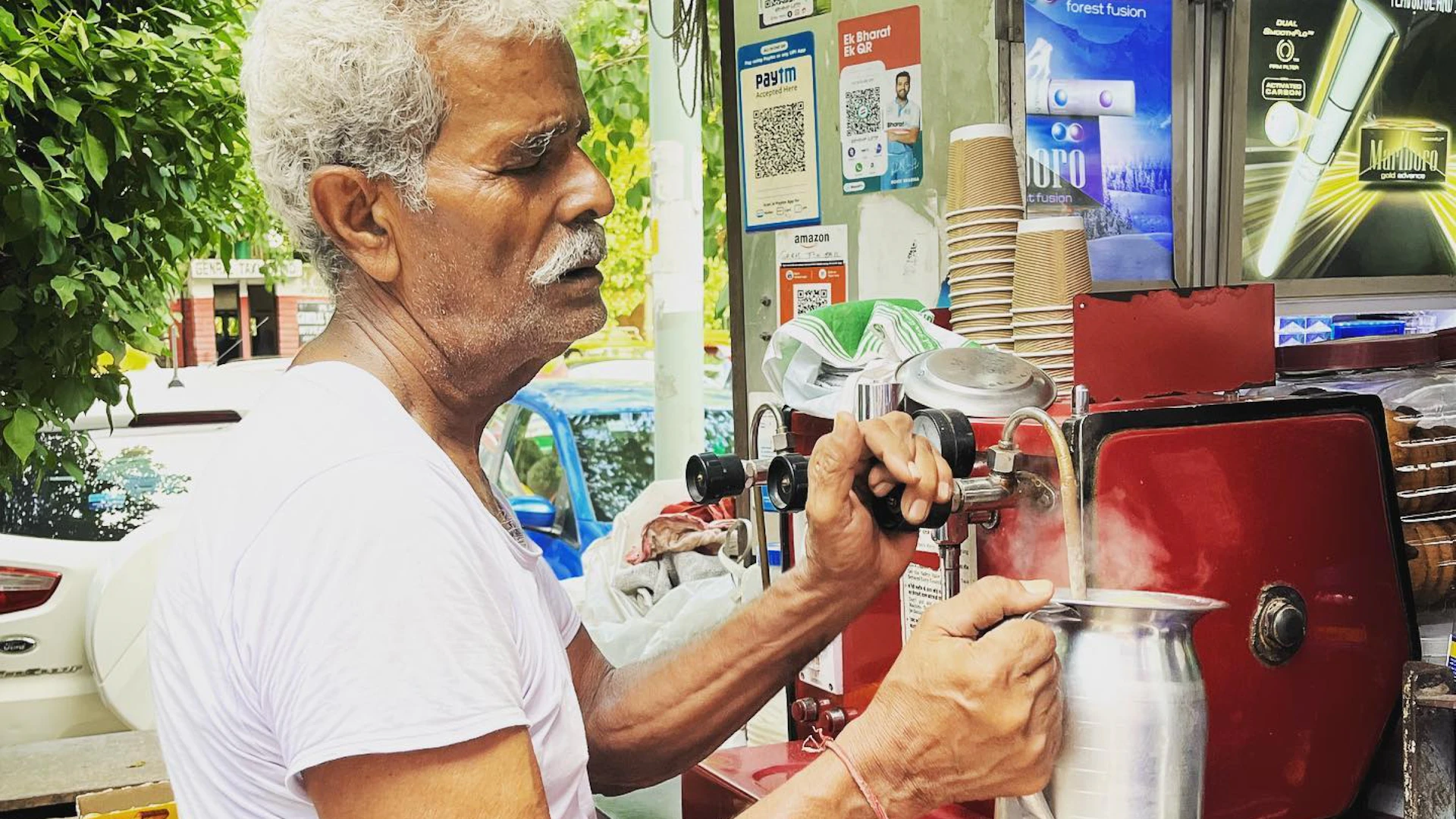
In my Green Park wanderings, a leafy New Delhi quarter or “colony”, Sig Chai Barista, or Chai Wallah, caught my immediate attention, respect and internal debate.
Ji (gender neutral, term of respect).
The elegance of a moustache that bridges the gap between the Indo-Continental.
What makes a barista; what makes a wallah?
Living in Italy, I have observed that the traits of a master barista are fastidiousness beyond mere attention to detail and focus under pressure. I know that feeling.
An Italian coffee barista and an Indian chai wallah operate in entirely different cultural landscapes, utilizing distinct equipment and ingredients. Yet, they serve as identical archetypes: the gatekeepers of their respective cultures' daily liquid rituals.
In Italy, coffee is a fast-paced, highly ritualized experience. A master barista’s modus operandi is as a high-speed machine operator in a bustling laboratory.
Italians drink their espresso al banco (standing at the bar), lasting less than two minutes. The barista must grind, tamp, lock, extract, and steam milk, allowing a hyper-efficient 30-second window per customer. A master barista understands pump pressure (typically 9 bars), water temperature and how slight shifts in humidity require immediate manual calibration of the grinder.
Unlike the rolling boil of a chai wallah, an Italian barista treats milk with delicate precision, steaming it to exactly 60–65°C to create a glossy, paint-like "microfoam" for cappuccinos. Presentation is crisp and professional. The espresso must feature a thick, hazelnut-colored crema (foam layer), served on a clean saucer with a small spoon and often a complimentary glass of water.
In contrast, an Indian chai wallah relies on sensory instinct and raw, theatrical showmanship on the open street. With alchemical instinct and without pressure gauges or temperature dials, the chai wallah judges readiness purely by eye—watching the caramel color of the milk and controlling the rising rolling boil of the topela (pot). Physics are combined with theatre, pouring boiling tea from heights of up to six feet to aerate the liquid, cooling to drinkable temperature and mixing sugar seamlessly. Spices (ginger, cardamom, lemongrass) are crushed with a mortar and pestle on the fly and adjusted dynamically based on weather, season, or regional preferences.
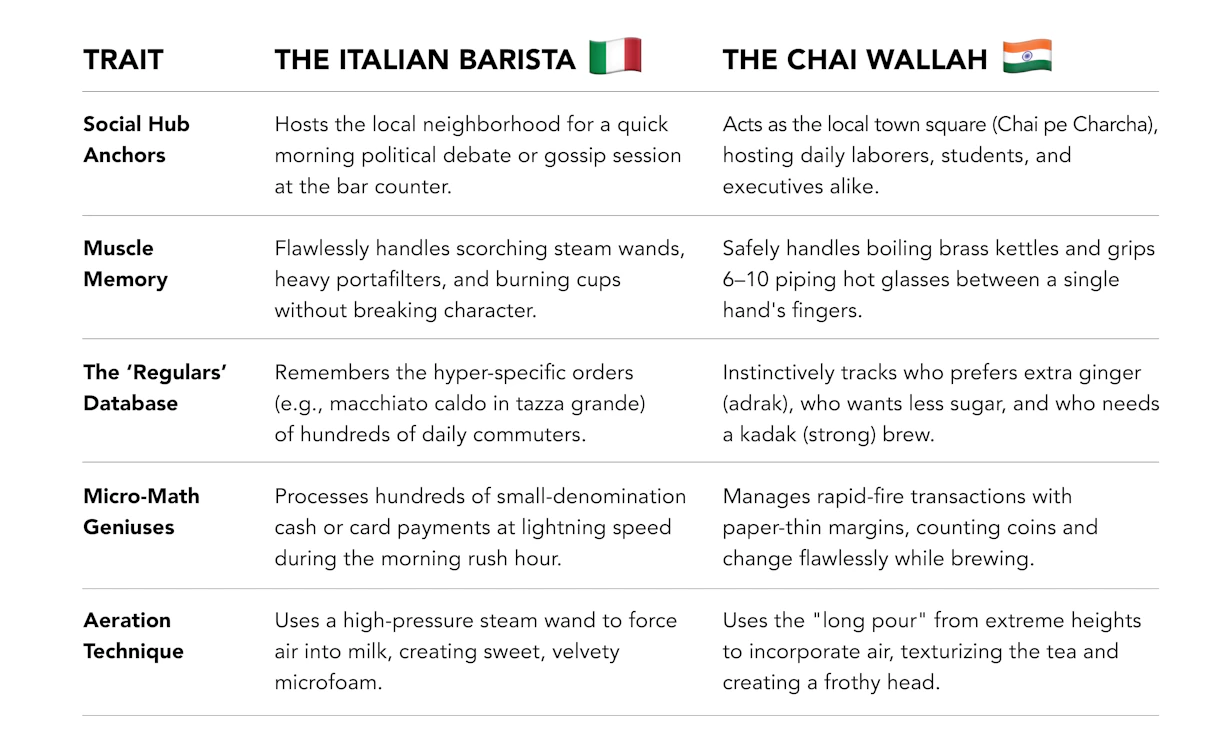
Despite the differences between a shiny Italian espresso bar and a rustic Indian roadside stall, the fundamental traits of these two masters directly overlap:
Ji nailed it with his masterful fusion of café and chai froth.