People also read



METAMORPHOSING
AUGUST 2026
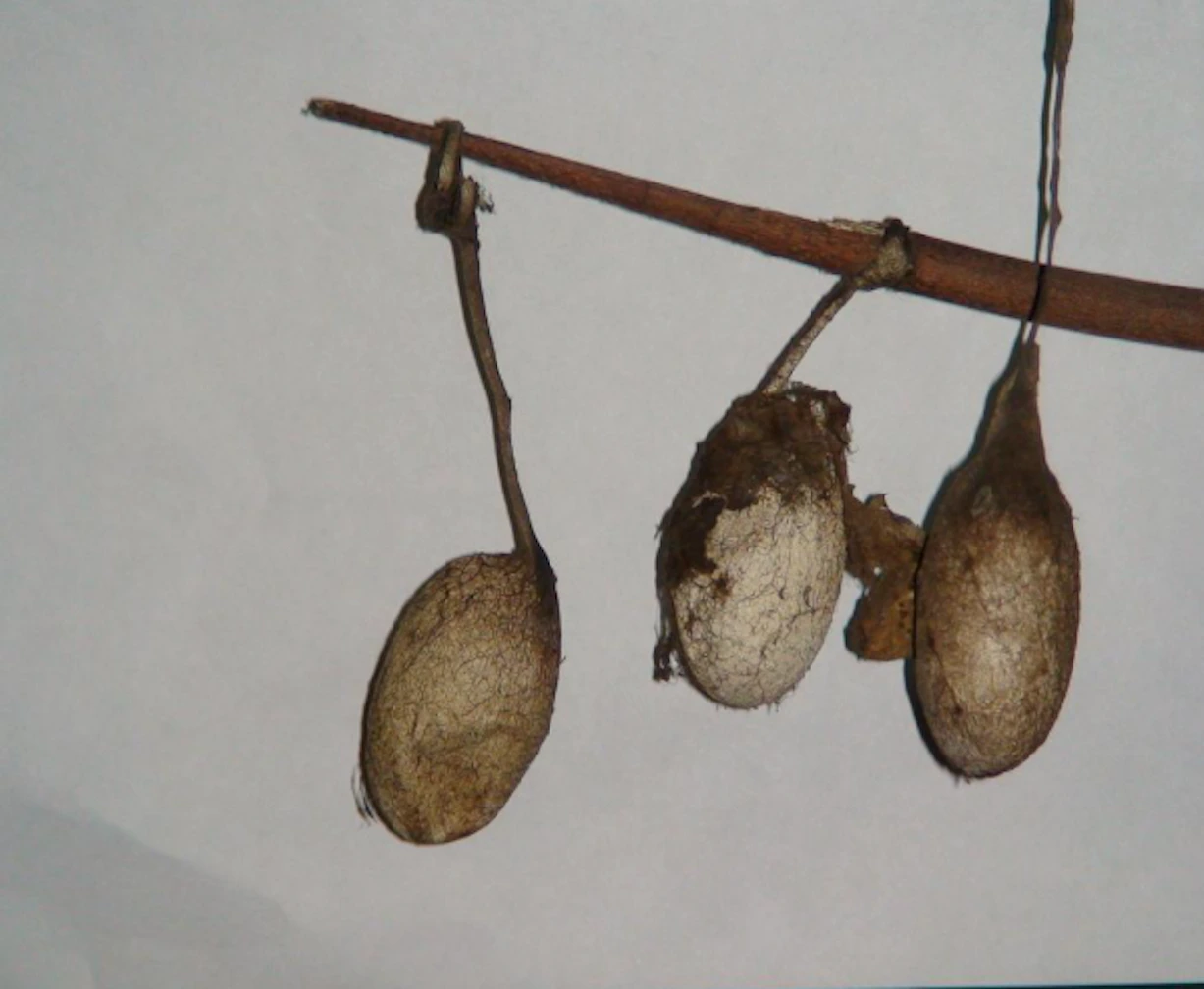
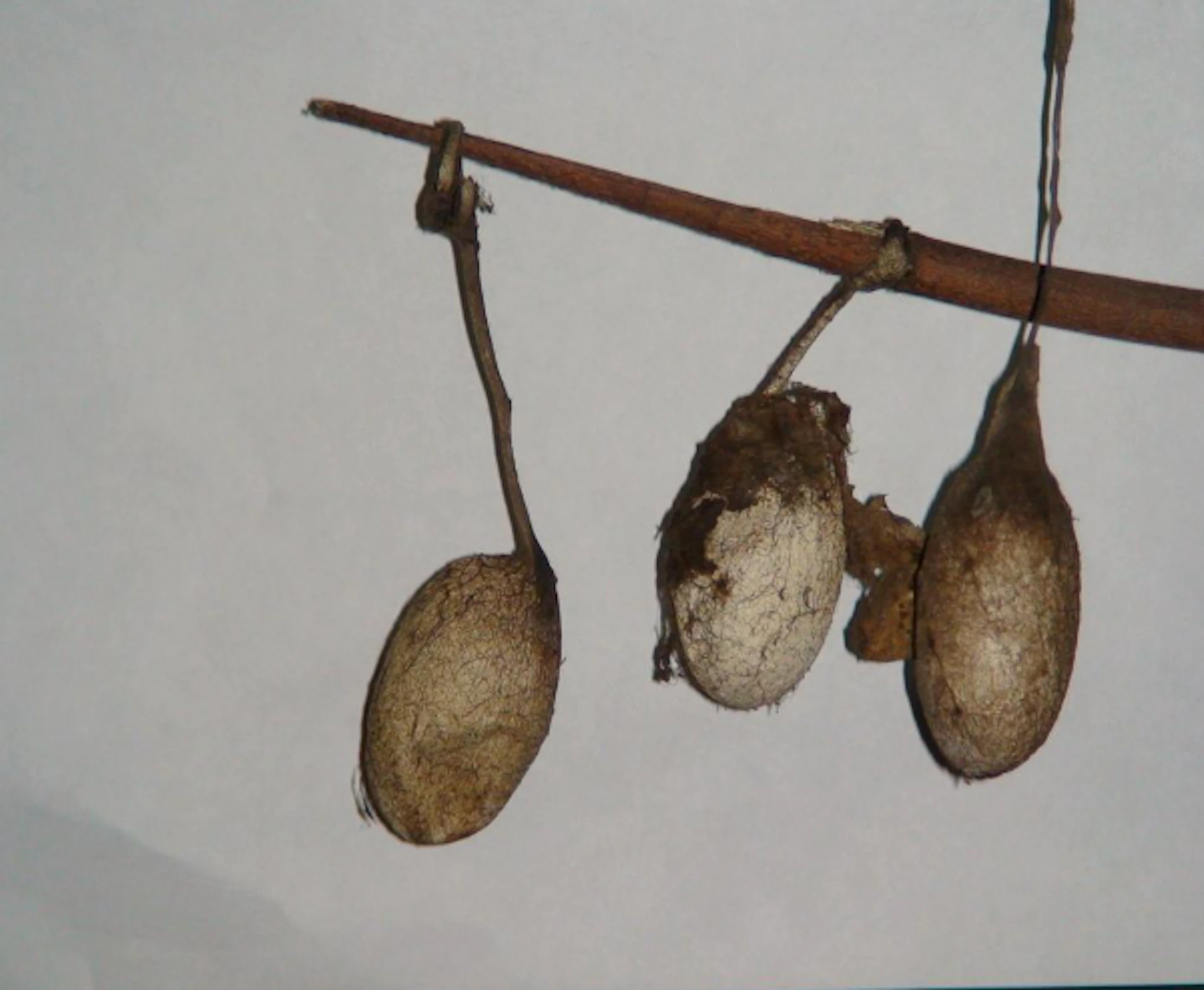
The creation of the cocoon stem, or peduncle, is a highly coordinated, instinctual engineering feat that the tropical Tussar caterpillar (Antheraea mylitta) executes over a full 24-hour period before it ever starts spinning its actual cocoon.
Because these wild silkworms pupate outdoors on forest trees, they must build a anchor strong enough to withstand heavy monsoon winds, torrential rains, and arboreal predators
Branch Selection
When the (metamorphosing) caterpillar completes its feeding cycle, its behavior changes drastically. Prompted by hormones, it purges its digestive tract and begins an active "wandering phase" to find a secure branch or twig. It typically identifies a fork where a leaf petiole meets a sturdy woody stem. Using its spinneret (a single exit tube located near its lower jaw), it secretes liquid fibroin protein coated in a heavy layer of gummy sericin. It casts an initial structural web or "scaffold" across the surrounding leaves to pull them inward, forming a protective canopy.
The Twig
Once the site is anchored, the caterpillar focuses entirely on the woody twig. Moving its head in a continuous back-and-forth pattern, it walks in circles around the circumference of the branch. It deposits dense, overlapping layers of liquid silk directly onto the bark, effectively creating a structural ring or "collar." This ensures that the entire weight of the upcoming cocoon is anchored to the living tree rather than just a weak leaf stem.
Weaving and drawing out the stem
After creating a secure collar around the twig, the caterpillar slowly shifts its body downward. It systematically weaves a thick, tightly packed rope of silk extending away from the branch. The caterpillar uses its front appendages to manipulate the silk and swings its head in tight figure-eight movements, layering hundreds of continuous silk loops over themselves to build thickness.
To give this rope its rigid, wood-like resilience, the caterpillar floods these specific fibers with an incredibly high concentration of sericin glue. This structural protein reacts chemically with the open air, causing the stem to immediately harden and turn a dark, weathered gray-brown color.
The cocoon
At the bottom of the finished peduncle, the caterpillar widens its weaving trajectory to form a small structural loop. This loop serves as the exact suspension point for the main capsule. With the stem fully established, the caterpillar suspends itself upside down and spends the next 4 to 8 days wrapping itself inside the actual oval cocoon shell, utilizing up to 1,000 to 1,500 meters of continuous silk filament.
Exit protocol
The peduncle is built so securely that when the caterpillar finally metamorphoses into a mature moth, it cannot break through it mechanically. Instead, the emerging moth releases a specialized enzyme called cocoonase from its mouth parts directly into the peduncle region. This fluid softens the tough, glued sericin fibers, allowing the moth to gently push the threads aside and escape without snapping the structural stem.